
Blog Post
Preparing for Discovery in a Shifting Global Class Actions Landscape

Managing Director,
FTI Consulting



FTI Technology recently attended and presented at the Perfect Law Global Class Actions and Mass Torts Conference in London. Jason Keenan moderated the session, "Discovery, Confidentiality & Cross-Border Evidence," in which he discussed the growth of class action regimes in several jurisdictions and practical ways organisations and counsel can prepare for discovery, with lawyers and judges from the U.K., European Union and U.S.
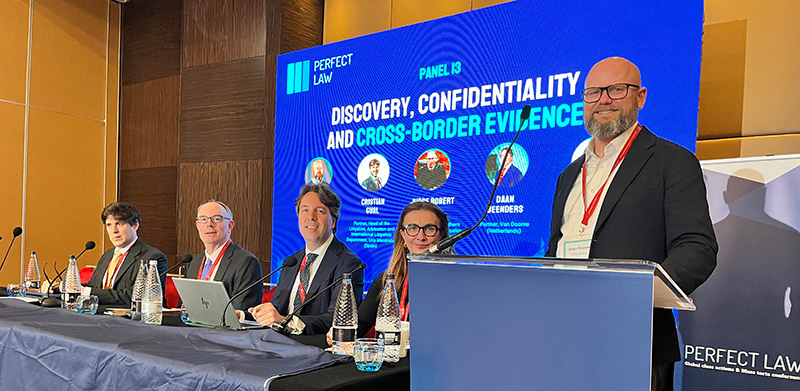
While class action litigation is already a cornerstone of legal practice in the U.S., these large collective actions are expanding significantly in the U.K. and EU, particularly opt-out claims, which have been enabled by recent legislation and introduce potential for significant damages and reputational risk. As these regimes continue to develop, organisations face different disclosure rules and procedural expectations depending on the forum, with added complexity where related proceedings run in parallel across multiple jurisdictions.
For example, in the U.S., parties meet and confer to agree upon discovery parameters, ensuring both sides are clear about the expectations in advance. In the U.K., proportionality is a significant consideration. Therefore, plaintiffs’ counsel need to be prepared to effectively outline the data they’re seeking, while simultaneously balancing the possibility of court rejection due to proportionality concerns. Across many EU jurisdictions, open-ended data requests are not permitted, and parties typically rely on more targeted, court-driven mechanisms for obtaining evidence. Therefore, claimants must be much more selective, requiring counsel to have advance knowledge of what they’re looking for and be strategic in their data requests.
Another key development in the U.K. comes from the Competition Appeal Tribunal, which oversees competition-related class actions and recently signaled a move toward more rigor on claimants during certification, with the possibility of greater disclosure obligations prior to certifying a class. This would mean greater scrutiny on the class action vehicle, which may lead claimants to seek more disclosure from defendants early on and, as claimants become more aggressive with their data requests, defendant organisations may face increased time, cost and resource needs to conduct discovery when a new action is filed.
Regardless of jurisdiction, these high-value, data-intensive cases place significant pressure on legal teams to respond quickly and strategically. There are several practical considerations to help counsel prepare for discovery challenges that are likely to arise during these litigations and reduce the overall risk and burden of the response. These include:
- Establish a data map and scoping strategy to support defensible proportionality arguments. A well-documented map of systems, custodians and time periods helps legal teams explain why certain sources should be prioritised (and others excluded). Practical steps include early data mapping and identification of key systems, targeted preservation, staged collection and review, and documentation of key decisions and stakeholders.
- Understand the long tail that class actions can create for preservation and data retention. These matters can span decades, so if long-term data retention and preservation planning aren’t considered early, organisations may experience surges in data and technology-related costs. Older data may be harder to retrieve or unavailable, while current data may not be on the right preservation schedule. Over time, organisations must also contend with system migrations, degradation and personnel changes that can present challenges in maintaining relevant data sources.
- Apply smart legal holds to avoid unexpected upticks in work and expense. Teams can apply granular legal holds to allow for tracking and monitoring for individual cases and case needs, rather than broad, organisation-level retention. This prevents the risks and cost associated with “delete everything” or “save everything” approaches.
- Understand conflicting obligations, which may arise between discovery needs and data privacy restrictions when transferring data across borders for multijurisdictional matters. Often, the most effective approach is to manage the risk, rather than trying to eliminate it entirely. For example, showing good faith through a data minimisation and targeting process by collecting, processing and reviewing data in the home jurisdiction, then excluding personal information and limiting disclosure and transfer to only the relevant data.
- Consider thoughtful use of artificial intelligence, which can reduce discovery burdens but requires oversight. AI has the capability of augmenting traditional discovery processes, helping to surface insights faster or identify relevant data that may otherwise be overlooked. Still, it is not a panacea, and teams must maintain robust quality control and human validation to ensure workflows produce accurate results and are able to withstand questioning and scrutiny from other parties during litigation.
Discovery has always been challenging in high stakes matters involving large volumes of complex data. Now, the emergence of new and varied class action regimes across jurisdictions is exacerbating these challenges. Legal teams that take steps to reduce data risk and anticipate likely obstacles will be in a stronger position to mitigate the burden and respond with the most effective approaches.
Related topics:
The views expressed herein are those of the author(s) and not necessarily the views of FTI Consulting, its management, its subsidiaries, its affiliates, or its other professionals.